Ancient Egypt: Life, Beliefs and Legacy

Explore how ancient Egyptians lived, what they believed, how their society worked and what they left behind.
Start with Discover Ancient Egypt and follow the tabs in order. Explore the resources and activities as you go.

Welcome to Ancient Egypt
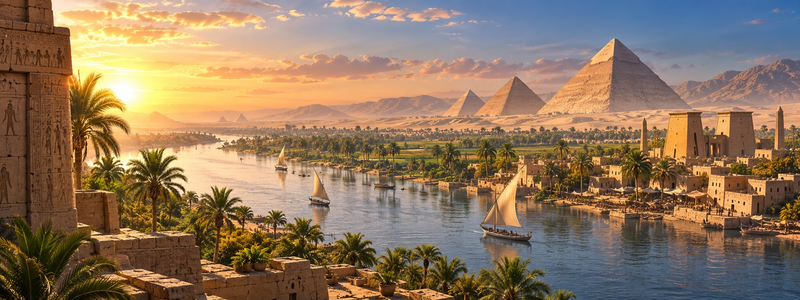
More than 5,000 years ago, one of the world's most remarkable civilizations developed along the River Nile.

Ancient Egypt lasted for thousands of years. During that time, Egyptians built enormous monuments, developed a writing system, created complex religious traditions and established a society ruled by powerful pharaohs.

But ancient Egypt was about much more than pyramids and mummies.

In this unit, you'll explore how ordinary people lived, why the Nile was so important, what Egyptians believed about life and death, and how their civilization continues to fascinate us today.

As you explore, think about one big question:
What helped ancient Egyptian civilization survive for so long?
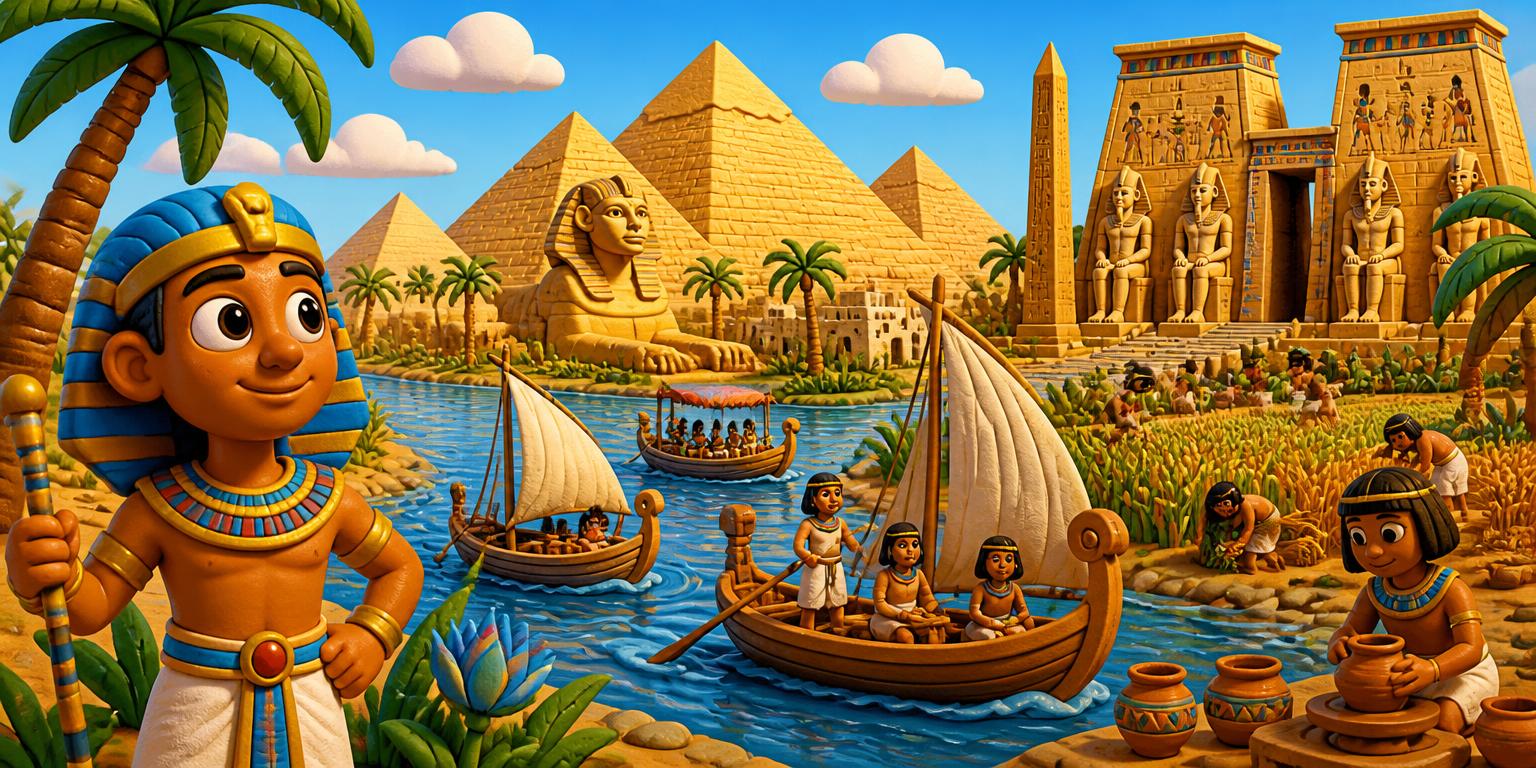
Ancient Egypt: Surprising Highlights

  • 1 At its peak, Ancient Egypt's population was roughly 3 to 5 million, showing a sizable, stable society for its era.
  • 2 Egyptian statues were often carved from hard stones like granite or basalt, chosen to withstand time and symbolize eternity.
  • 3 The symbol of the scarab beetle represented rebirth and renewal, linked to the sun god Khepri who rolled the sun across the sky.
netboard.me
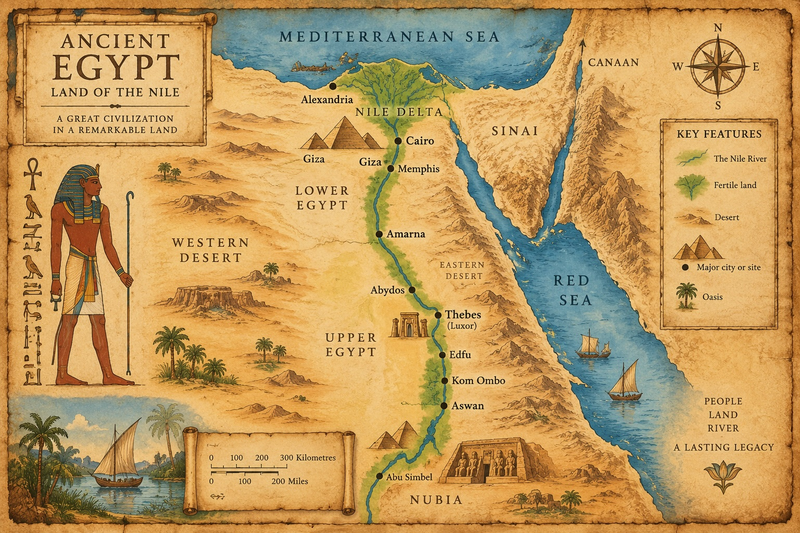
Why the Nile Mattered
Look at the map of ancient Egypt. What do you notice about where the river, farmland and major settlements are located?

Much of Egypt is desert. The River Nile created a narrow corridor where people could live and grow food.

The river provided water for people, crops and animals. Fertile land along its banks supported farming, while the Nile itself became an important route for moving people, goods and information.

This helped towns and cities develop along the river and connected different parts of Egypt.

Think about it:
If you were choosing where to build a settlement in ancient Egypt, where would you put it? What features on the map influenced your decision?
 
Watch: Discover Ancient Egypt
Start with this short introduction to one of the world's longest-lasting civilizations.

As you watch, look for clues about three things:

  • What made ancient Egypt such a powerful civilization?
  • What did ancient Egyptians achieve?
  • Why are we still fascinated by ancient Egypt today?
You don't need to remember every name or date yet. This is your first look at the world we'll be exploring.
Original link

The Nile’s Vital Role in Ancient Egypt

  • 1 Ancient Egyptians developed a unique calendar based on the Nile’s flooding cycle, which helped predict the best times to plant crops.
  • 2 The fertile soil left by annual Nile floods allowed Egyptians to farm surplus food, supporting urban growth and complex society.
  • 3 Along the Nile, villages often had distinct smells from papyrus and river plants drying, marking daily life with natural scents.
netboard.me
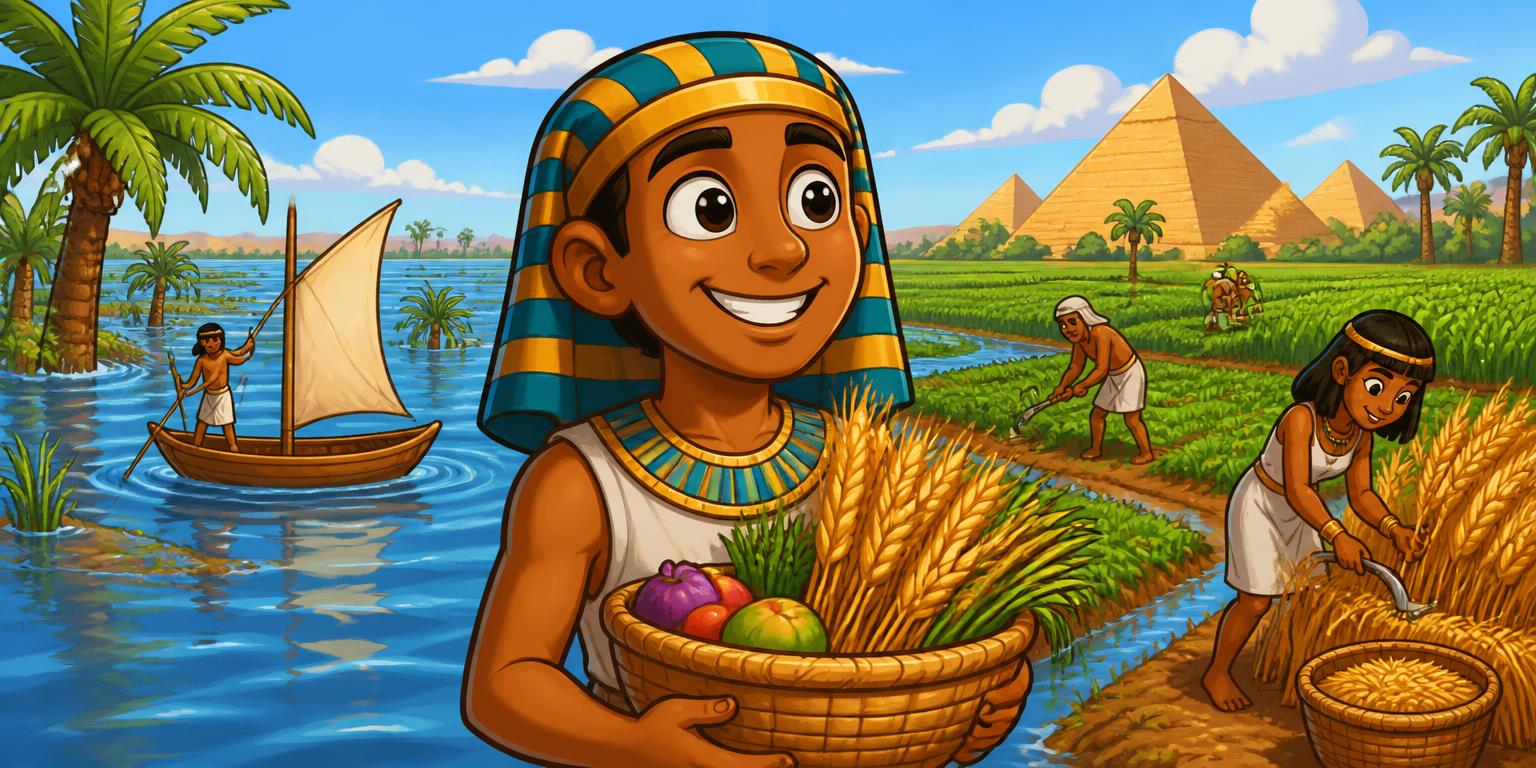
Ancient Egypt: From Flood to Harvest

  1. 1 Each year, the Nile River floods between June and September, enriching the soil.
  2. 2 After the floodwaters recede, farmers prepare the land by plowing and planting seeds.
  3. 3 During the growing season, crops like wheat and barley develop with irrigation support.
  4. 4 In late spring, the matured crops are harvested to provide food for the year ahead.
netboard.me
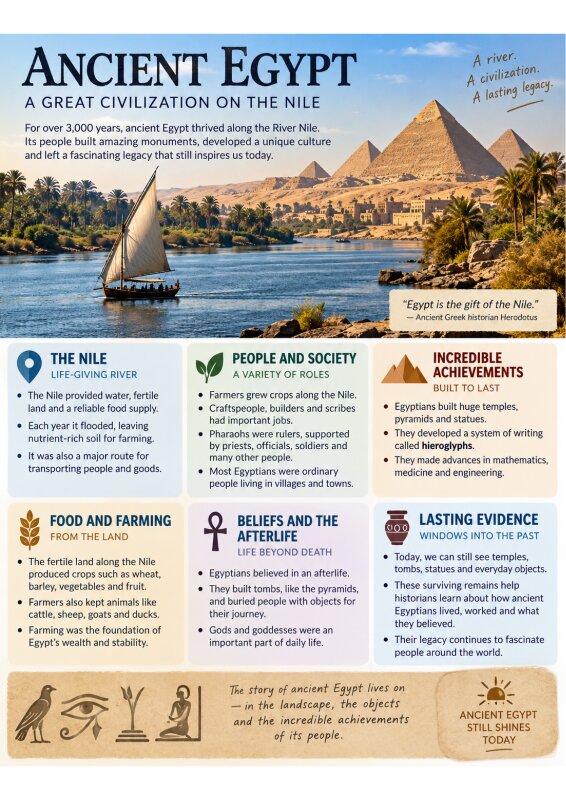
Ancient Egypt Quick Facts
Timeline of ancient Egypt
Explore Ancient Egypt Through Time

Ancient Egyptian civilization lasted for more than 3,000 years. Explore the British Museum's timeline to see how Egypt changed during this enormous period of history.

Choose one event, person, object or development that catches your attention.

As you explore, think about:
  • When did it happen?
  • What does it tell us about ancient Egypt?
  • Why did you choose it?
  • Was anything different from what you expected?

Original link
Ancient Egypt: Quick Check
Check what you remember from your introduction to ancient Egypt and the River Nile.
5 questions
Unlimited time