Ancient Egypt: Life, Beliefs and Legacy

Explore how ancient Egyptians lived, what they believed, how their society worked and what they left behind.
Start with Discover Ancient Egypt and follow the tabs in order. Explore the resources and activities as you go.

Ancient Egypt disappeared as a civilization long ago, but traces of its world are still all around us.

Its monuments, sculptures, writing and objects have survived for thousands of years — allowing us to explore a civilization very different from our own.
Let's finish by looking at what ancient Egypt left behind.
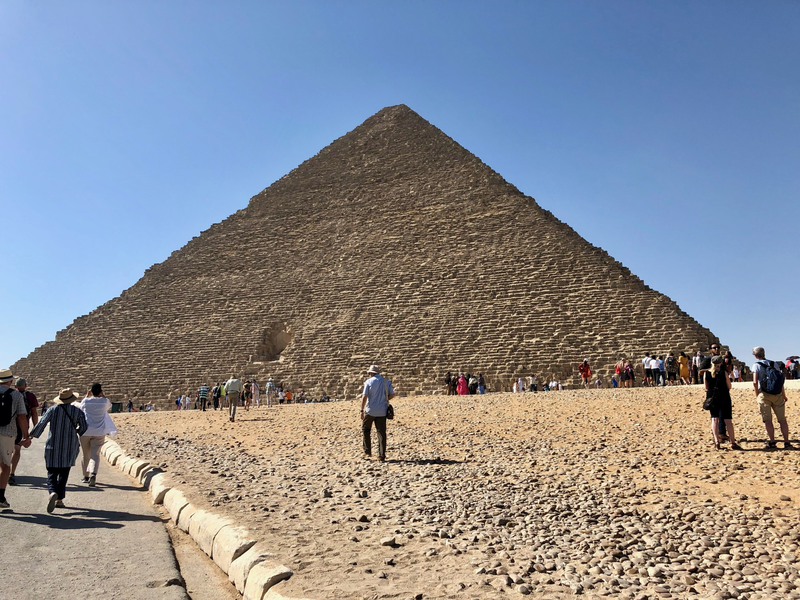
The Great Pyramid of Giza

Built around 4,500 years ago for the pharaoh Khufu, the Great Pyramid was the tallest human-made structure in the world for thousands of years.

Think about it: What would a civilization need to organize before a project on this scale could even begin?

 
Explore: Hatshepsut in 3D
This sphinx represents Hatshepsut, one of the few women to rule ancient Egypt as pharaoh.

Don't just look at it from the front. Rotate the model, zoom in and examine it from different angles.

Look for clues:
  • What features make the figure look powerful?
  • What details seem human, and which belong to the sphinx?
  • Why might a ruler choose to be represented in this form?
  • What do you think this sculpture was meant to communicate about Hatshepsut?

Hidden Facts About Ancient Egyptian Pyramids

  • 1 The Giza plateau’s bedrock slant influenced pyramid shapes, helping builders align them precisely with cardinal points.
  • 2 The reign of Pharaoh Sneferu marked a turning point with experiments in pyramid design, leading from stepped to smooth-sided pyramids.
  • 3 Archaeologists use radar and 3D modeling to reveal internal pyramid chambers and construction techniques without excavation.
netboard.me

What survives?
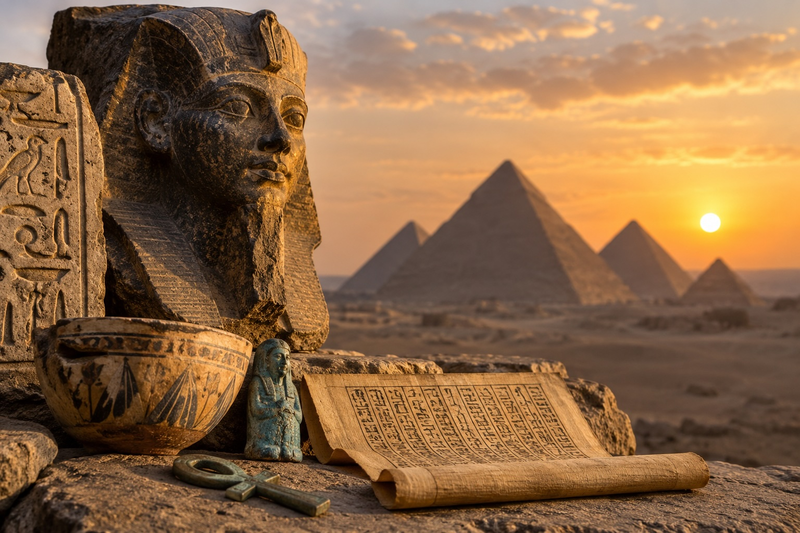
Thousands of years later, monuments, writing, artworks and everyday objects still allow us to investigate ancient Egypt.

Which piece of evidence on this board taught you the most about this civilization — and why?

Ancient Egypt: Key Ideas
Start
Flashcards