Our Changing Planet – A Collaborative Climate Project

Our Climate Challenge
Earth’s climate has always changed, but the warming happening today is different.
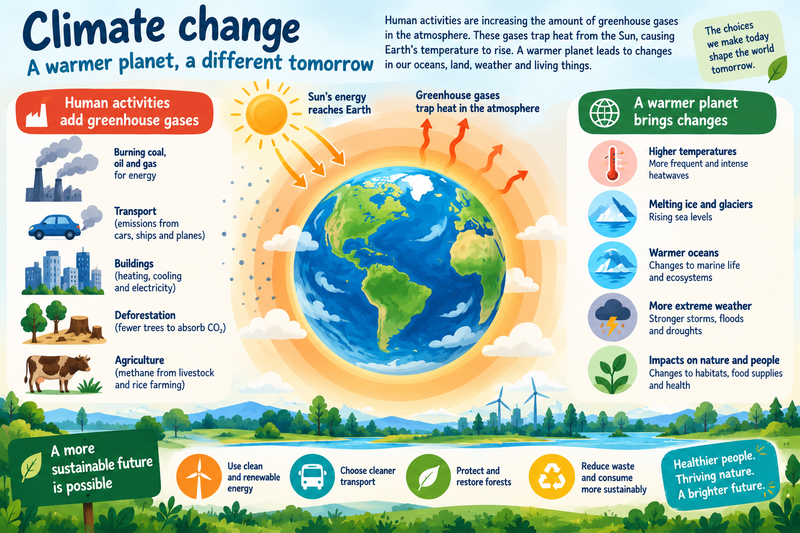
Human activities, especially burning coal, oil and gas, are increasing the amount of greenhouse gases in the atmosphere. These gases trap heat and cause the planet to warm.

Climate change is about more than temperature. It can affect oceans, forests, wildlife, weather, food, cities and the way we produce and use energy.

In this project, you’ll work in teams to investigate some of these changes and the ways people are responding to them.
Your goal is not simply to collect facts. You’ll use the resources provided, decide what information is important, explain it in your own words and share your findings with the class.
Watch: Climate Change Explained
Start with this video for an overview of what climate change is, what is causing it and why it affects different parts of our planet.

As you watch, think about these questions:
  • What is causing the Earth to warm?
  • What changes can we already observe?
  • Which effects of climate change seem most important to you?
Original link
Explore: Discover Your Changing World

This NOAA activity book explores how Earth's climate works, how scientists study climate change and how changes in the climate can affect our planet.

You don't need to read the whole book. Browse through it and choose an activity or idea that connects with something you are investigating in this project.

The Evidence: Earth Is Getting Warmer
Scientists measure climate change in many different ways.

They study temperature records, glaciers and ice sheets, sea levels, oceans, satellites, tree rings and even ancient ice cores.

Together, these different measurements tell the same story: Earth is warming.

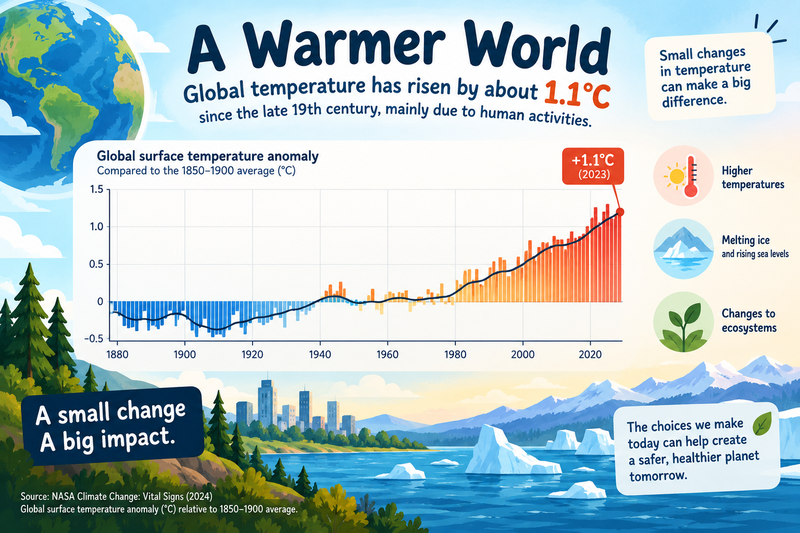
Look closely at the temperature chart.

  • What trend can you see?
  • What does the chart tell us that looking at the weather on a single day cannot?

 
What Is Climate Change? | United Nations
Climate change refers to long-term shifts in temperatures and weather patterns. Such shifts can be natural, due to changes in the sun’s activity or large volcanic eruptions. But since the 1800s, human activities have been the main driver of climate change, primarily due to the burning of fossil fuels like coal, oil and gas.
Original link
Assessing the Global Temperature and Precipitation Analysis in 2025
2025 ranked as the third-warmest year in NOAA’s 176-year record, with a global surface temperature 2.11°F (1.17°C) higher than the 20th-century baseline.
Original link